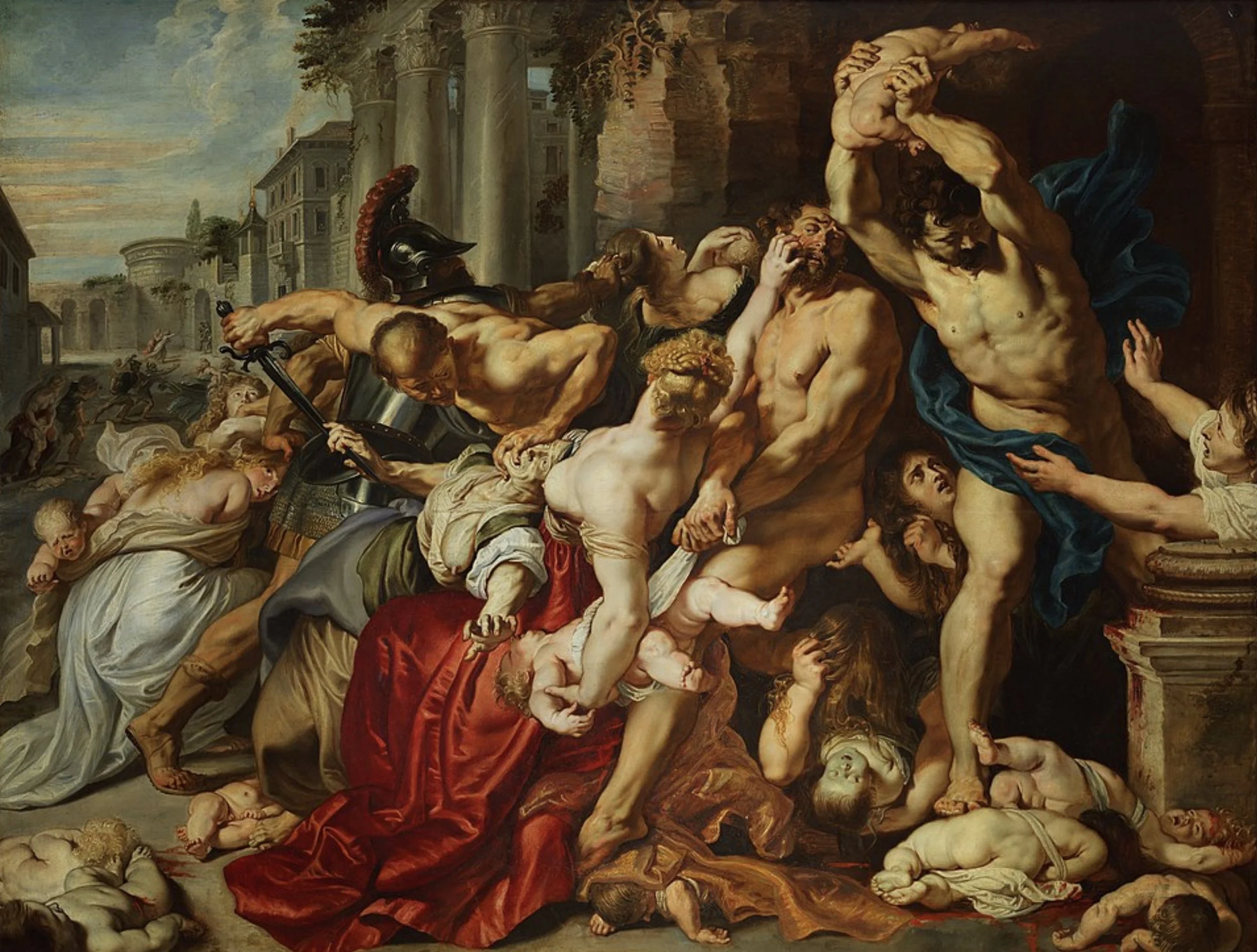
“If you could un-invent one thing, what would it be — and what would unravel as a result?”
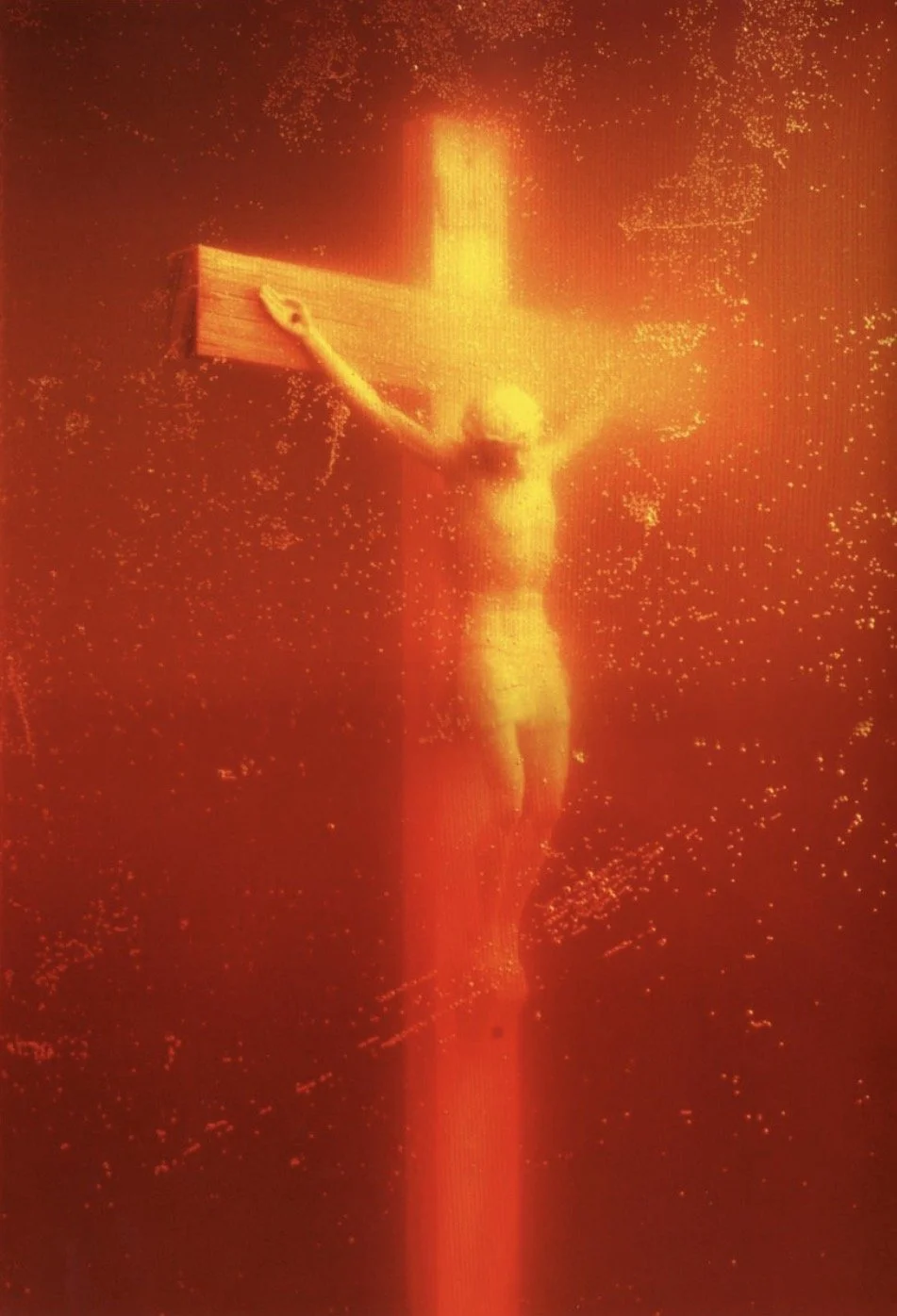
As the daughter of a world-news fatigued paranoid, I’m constantly listening to the radio, reading the news, engaging in discussion about current affairs. Lately, US President Donald Trump sparked controversy over an AI-generated “sacrilegious” photo, casting himself as Jesus. The war against Iran was framed as a crusade, there’s a rift between religion and politics, politicians use god to mobilise support. Aside from America, all have one thing in common: religion. I’m constantly frustrated with how religion is becoming an excuse, justification, or reputation boost. There is so much power given to religious authorities, like how the Pope or a religious politician can justify wars by the virtue of his authority. The First Amendment in America, separation of church and state, is constantly being breached. Despite the growing atheism and secular values, our world is still clinging onto religion, whether for faith, principles, or personal gain. This leads me to wonder: what would happen if we “un-invent” religion?
“In hoc signo vinces”
Over ten-thousand religions, tens of thousands of gods worshipped, and six billion people religious. It’s a widespread worship to omnipotent beings. Most prominently, the big five — Christianity, Buddhism, Hinduism, Judaism, Islam. Noticeably, all pose stories central to their ethics. Humans narrate religion like storybooks; authors have intentions. Written religion and history is never fully neutral, they often have ulterior motives, hidden agendas, personal gains. However, we are unable to forget religion. We feel a strong emotional attachment to it, similar to how one would feel about a past that shaped their character. For some, religion is an identity. Worship god, follow the principles, be “good”, and you go to heaven. It is the meaning of life. Without instructions, direction, and identity, what would humanity look like?
Crime, discrimination, social inequality, war. Religion is often used for justification and manipulation. Take the 2026 Iran-Israel war. US Secretary of War Pete Hegseth framed the war against Iran as a “holy war” and “crusade”. To imply a holy war is to say “God wills it.” God wills it, so the restraint on violence is removed. God wills it: In hoc signo vinces, or “In this sign thou shalt conquer.” Used by Constantine to illustrate divine victory, the cross is a symbol for spiritual and earthly victory. As an atheist, I wonder what the justification for war would be without religion. Without empirical evidence, religion can’t be disproven. Unlike other deceptions that can be proven over time (like arresting a president to reduce drug trafficking), religion is conjectural. Its deception continues in surreptitious ways, so that people will be fooled again and again.
The Unravelling
By un-inventing religion, we lose the holistic ritual to worship. Physical manifestation of heritage will be lost - language and idioms, body art, attire, rites of passage, collective celebration. No more Christmas, Easter, Holi, Diwali, Buddha’s Birthday…thinking about the absence of long awaited presents, chocolates, and most importantly, treasured school holidays saddens me. That said, we would be culturally just as rich without religion by inventing mythologies that aren’t divine. For example, Aesop’s Fables, short moralistic tales on virtue and behaviour. Instead of religion and sacred text, myths will be the generational framework for our principles. Perhaps mythologies will also give way to philosophical developments on existentialism - why we exist, what we exist for, and accepting our mortality - I will cover this later on.
Aside from culture, empirical subjects would be more developed than today. Less obsession over god makes room for the sciences. Too preoccupied with witch hunting and the Satanic Panic, we sacrificed logic and rational to hysteria. Imagine if scientific discoveries were unearthed earlier; if artificial intelligence was invented before the twenty-first century. Perhaps the sci-fi tropes of flying cars, teleportation portals, sky-cities…they could have been our reality. As Rickey Gervais puts it, “… Science is constantly proved all the time. You see, if we take something like any fiction, any holy book… and destroyed it, in a thousand years’ time, that wouldn’t come back just as it was. Whereas if we took every science book, and every fact, and destroyed them all, in a thousand years they’d all be back, because all the same tests would [produce] the same result.” Ultimately, religion is just a series of coincidences.
On the flip side, absence of religion displaces many people from the comfort of morals. No sacred texts, cautionary tales, and guidelines that dictate what counts as a sin. The disoriented wander without direction, meaning, and identity. There are principles driven by religion, like promiscuity, adultery, wrath. However, these can be a hinderance as well - religion is inherently conservative, it typically views LGBTQA+ and other progressive stances as ‘against divine creation’. One can even argue that religion prevents identity exploration - sexual, dietary, cultural, ideological. In our battle between the liberal and conservative, we must ask ourselves whether direction is worth the sacrifice of expression.
If a world without religion is oriented around science, are we any less human? Numerous religious principles, architecture, and artworks would be lost to AI. For example, the Last Supper, The Creation of Adam, The Last Judgement, Virgin of the Goldfinch. Theoretically, humanity becomes an inferior version of AI. However, philosopher Friedrich Nietzsche argues otherwise. “Become who you are”, he writes. Nietzsche’s “The Übermensch” (Superman) illustrates how we should prioritise ourselves instead of conforming to other values like a herd (as Nietzsche rather rudely describes Christians, die heerde). This philosophy is similar to Renaissance Humanism, a secular movement for human freedom and happiness. Shifting focus away from god prioritises life on Earth rather than afterlife.
Two great narcotics in the history of mankind: Christianity…and alcohol
“God is dead. God remains dead. And we have killed him.” Religion, like alcohol, numbs pain. It is a transient feeling of satisfaction, to cope with the pains of reality. One may argue that the absence of religion leaves a vacuum. The danger is not only chaos and lack of morality, but nihilism. This is what Nietzsche warns us against. However, I think that the dangers of religion outweigh the risks without it. What drives people to extreme actions are extreme beliefs. Absence of religion isn’t the end of life’s meaning, but the beginning of humanity’s decision on what the meaning should be. Nietzsche writes that the humanities and culture will replace religion. Instead of scriptures, we use philosophy, art, music, literature to form the frameworks of life. LGBTQ+ discrimination, reproduction rights, authoritarian justifications, war. The world is seemingly falling further away from Nietzsche’s ideals, fuelled by greed, power, and religion.
The above points are mere guesses to what unravels with mass-atheism. As a fifteen year old high schooler, I don’t know much about the humanities and religion, let alone the meaning of life. But I know enough to hope that Nietzsche is right.