BIEA STEM Competition
Distinguished Guest of Honour
British International Education Association - Chinese Division
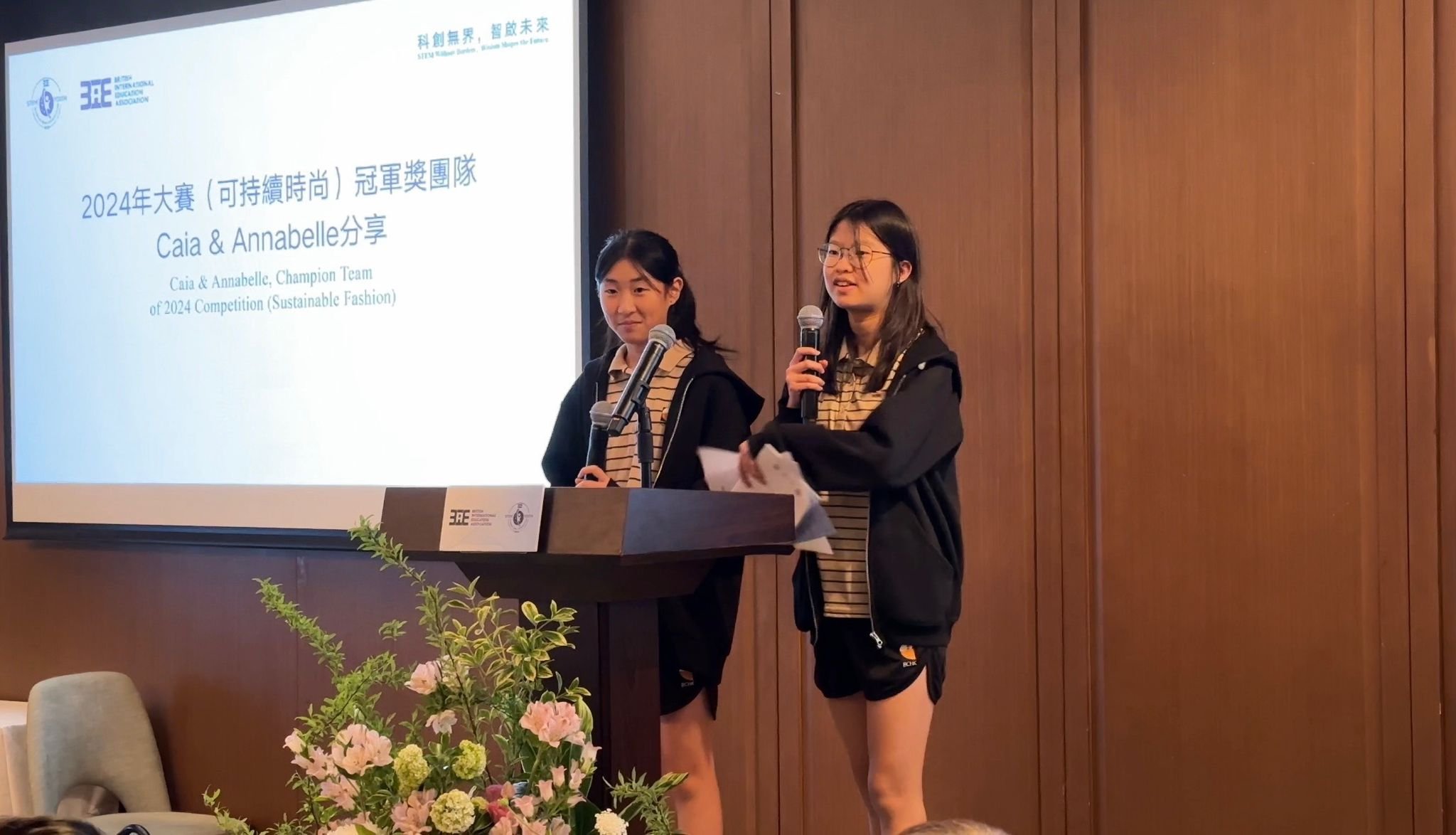
Caia and I have collaborated on quite a number of competitions, and speaking personally, I think the BIEA is one of the most well organised, interesting, and fun competitions. Our process involved drawings, model making, origami, things that normally wouldn’t extend so practically in actually crafting up our ideas, and turning them into real-life applicable solutions. Of course, we set out to do the best we can, but when we arrived in London and saw all the other competitors, the vibe was no longer about winning, but sharing ideas, and broadening our horizons. We got to see other students’ ideas materialising from different cultures to ours, with different social and practical needs, with different resources, different climatic conditions, and with different values. We were just thrilled being there, and winning was just the icing on the cake. I remember genuinely rooting for some of the other teams whose ideas we really liked. I guess what i’m trying to say is, the BIEA did really well in creating an environment where competitors had a camaraderie amongst the students, instead of an adversarial one. And of course, being a competition based in Britain, we got to travel to London and spent quite a few days there exploring the city. I got to watch Le Miserable, saw a concert at the Royal Albert Hall, and took a side trip to Paris - and somewhere between all that, we almost forgot we were there for a competition, which explains why winning came as such a pleasant surprise.
STEM may aspire to advances in civilisation, but it begins with us humans. Sometimes we forget that technology, science, and maths are a means to an end, an end that if done right, fulfills the betterment of humanity. Since the Second World War, machines have replaced us in processing information. Since the 60s, they’ve helped us to the moon. Machines have always been our tool, a means to our human story. But now, they’re beating us at what we thought makes us human - Chess, GO, Bridge, Mahjong, writing a fiction novel, graphics, and just last week, a marathon, and now…. just recently, table tennis - nothing is safe. Every week, we’re learning that what makes us human is slowly overtaken, our jobs, our hobbies, and with social media algorithms, our thoughts and desires. Bit by bit, we find ourselves less able to make a difference in this world. I often talk with my parents and friends asking the same question, what will we do when we graduate from high school? Subject by subject, they get crossed out because the human story no longer needs us. So, ultimately, are we advancing for humans? Or are we advancing for the sake of advancing??
If we go through the rabbit hole of if we are needed in this world, or if we even know what makes us humans…humans, you could end up in some pretty dark places. But if we’re ever in doubt, I suggest we go back to where it all began, during the Enlightenment, when Rene Descartes proclaimed “Je pense, donc je suis”, or “I think, therefore I am”. That phrase unfortunately, requires some desperate alteration. May I suggest, “I feel, therefore I think, therefore I am”.
Machines have overtaken us in the thinking department, and much of the “doing” faculty too it seems. I think it’s no coincidence that the Enlightenment and the Renaissance Humanism happened around the same time. Just as they advance in science, some very smart people back in the 16th Century decided, they also need advances in human virtue, individualism, and perhaps what we would call the Humanities. Back in the present, I think we also need, rather desperately, a good dose of Humanities - and it starts with us.
Aside from being a better acronym, STEAM suggests not just an extra discipline in the discourse, but more than that, it suggests collaboration and cross disciplinary learning. And at this point, I must conduct some truthtelling, some unmasking if you will. I really am quite terrible at Science, and in fact, I’m actually more of a humanities girl. Before the BIEA Competition, I admired STEM only from a safe, humanities-approved distance? The competition taught me that STEM can be about human needs too, that the road of our human story is yet complete, BUT, the direction must be focused on us - not machines, and certainly, not the profit of the tech giants.
And in the world of STEAM, we believe that we should act upon a basis of us as individuals, our ability to change the world for the better, and our ability to create change, not to a world that is “perfect” but a world that humanity can be proud to call their own.